
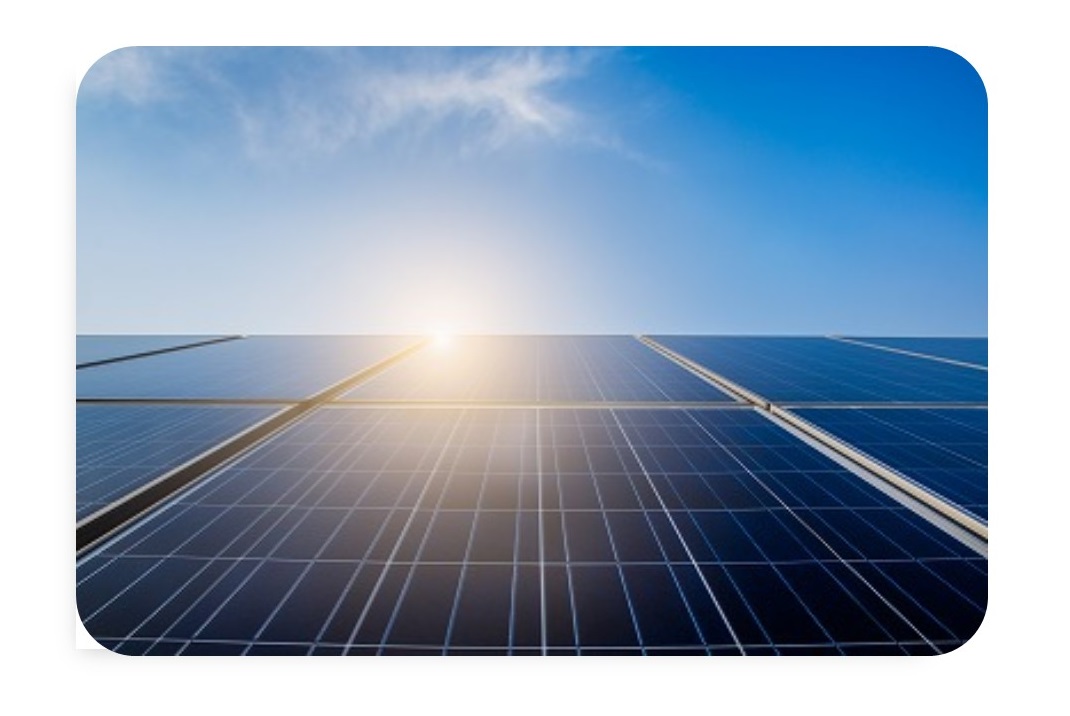
 Global PV installations reached a record 452 GW in 2024, bringing cumulative capacity to 1,865 GW. The International Energy Agency is forecasting even faster expansion, with growth projected to reach 5,838–6,999 GW by 2030. However, contrary to these global trends, Japan's capacity is in decline. In fiscal year 2023, new capacity fell below 6 GW and cumulative installations are expected to remain at around 90 GW. The cost of solar power generation has dropped to below 10 yen per kWh, making it more cost-effective than thermal or nuclear power, although having previously been higher than global averages. Japan has the opportunity to greatly expand solar power by utilizing the vast potential of rooftops, buildings, and farmlands.
Highlights (Latest 5 Posts)
| Case Study | [Solar Sharing] Tsuboguchi Agriculture: Solar Panels Protect Rice from Extreme Heat (30 September 2026) |
| Column | Solar PV and Batteries Cushion EU Electricity Prices from New Gas Shock (4 September 2026) |
| Report | Rapid Growth in Distributed Solar and Batteries Enables Australia to Reach 40% Renewables (22 July 2026) |
| Case Study | [Solar Sharing] Nobeyama Agri-Solar: Protecting Spinach from Sunlight and Rain (21 July 2026) |
| Column | Global Solar Deployment Hit New Records in 2025 (19 May 2026) |

Reports
-
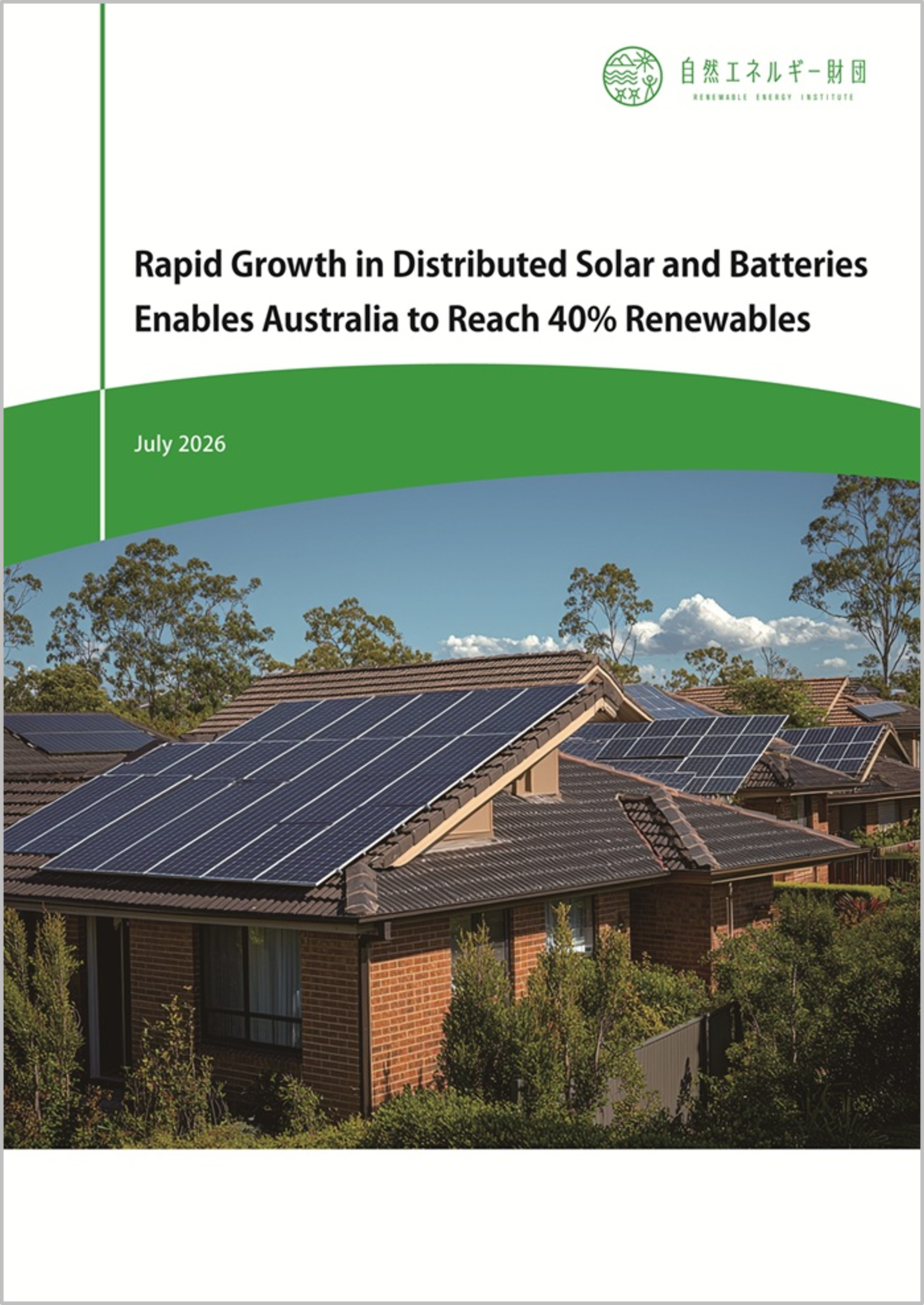
- Rapid Growth in Distributed Solar and Batteries Enables Australia to Reach 40% Renewables
22 July 2026 - Drawing on up-to-date data and numerous exchanges with Australian energy experts, this report examines Australia’s transition from a centralized power system toward a more distributed one. It identifies lessons for developing a power system that is affordable, resilient, and sustainable.
- Rapid Growth in Distributed Solar and Batteries Enables Australia to Reach 40% Renewables
-
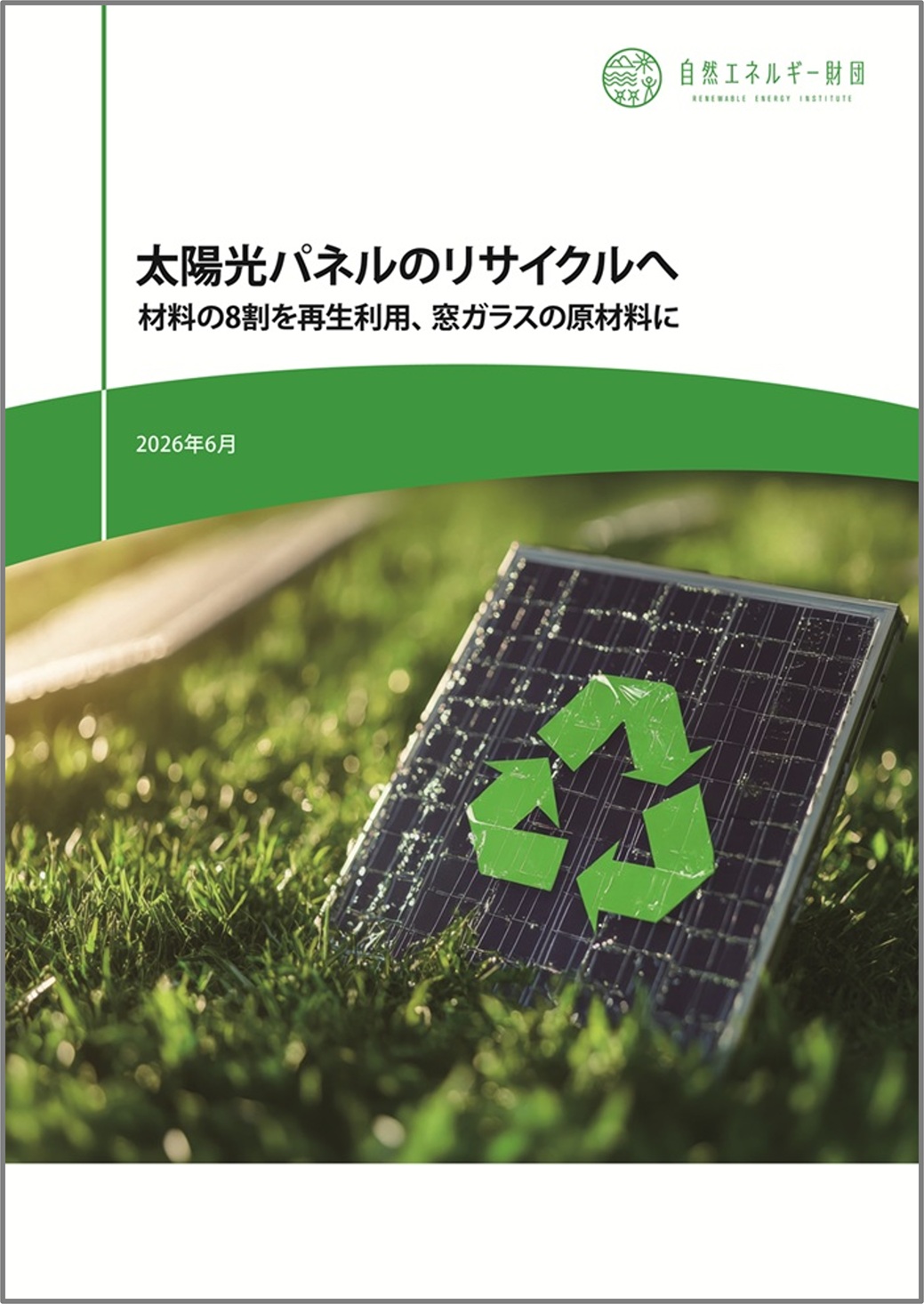
- Toward Solar Panel Recycling
Recovering 80% of Materials with Glass Recycled for Window Glass
3 June 2026 - This report examines the current status and challenges of solar panel recycling in Japan and outlines key issues and policy measures that should be considered in advancing mandatory recycling.
*Full report in Japanese
- Toward Solar Panel Recycling
-
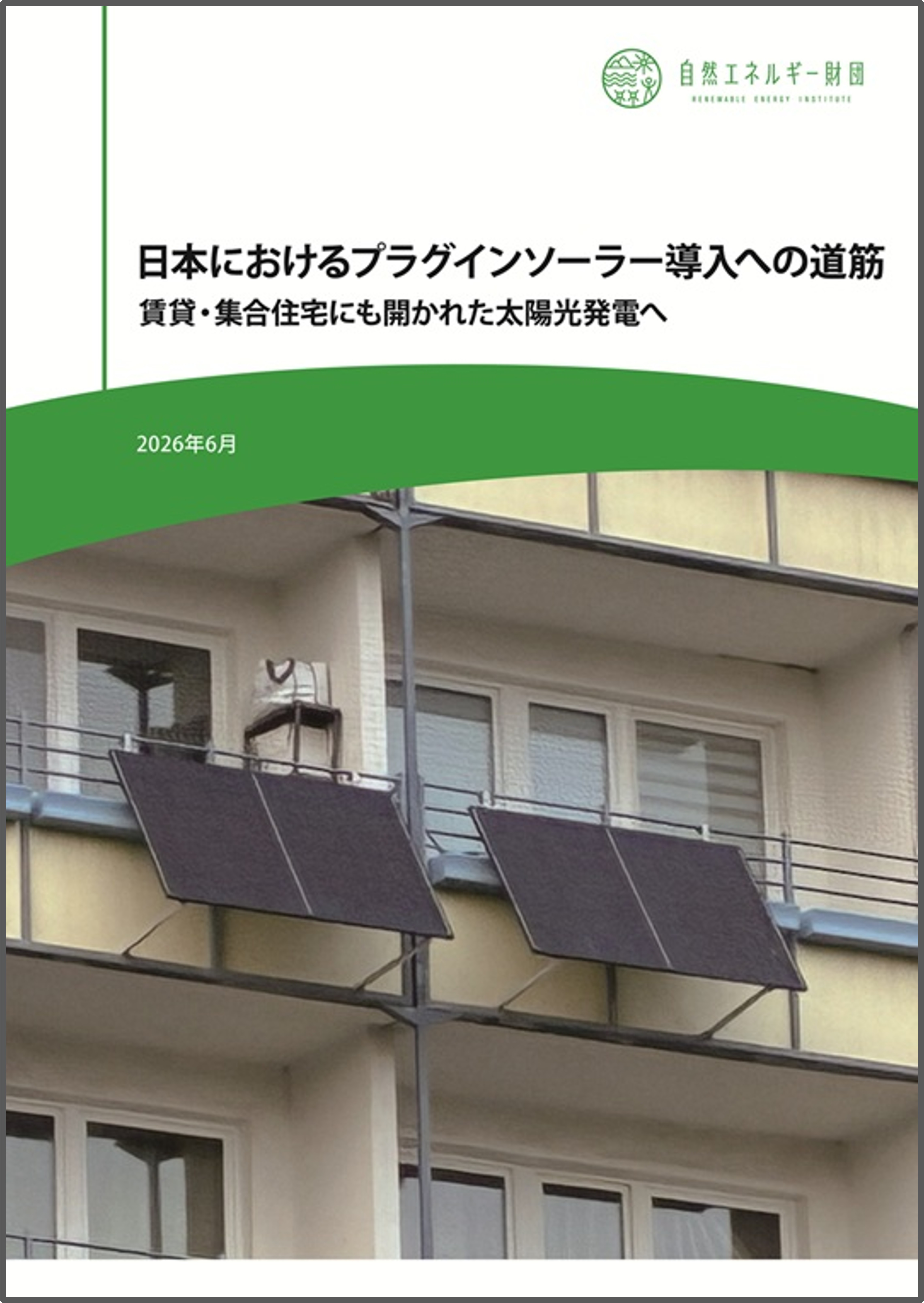
- Plug-in Solar in Japan
A Roadmap for Making Solar Power Accessible to Apartment Residents
1 June 2026 - This proposal sets out a roadmap for introducing plug-in solar in Japan: starting with demonstration projects and technical verification, followed by the creation of a dedicated small-scale category, the development of safety standards and certification, and the simplification of procedures for households and multi-family housing.
*Full report in Japanese
- Plug-in Solar in Japan
-

- Plug-in PV
How Germany Made Solar Accessible to All
25 March 2026 - This report presents Germany’s experience, where removing administrative and technical barriers enabled the rapid expansion of plug-in solar. It provides detailed analysis from the perspectives of policy design, market development, safety standards, and applications in multi-family housing. The report also highlights that the significance of plug-in solar extends beyond increasing solar power generation to its broader societal impact.
- Plug-in PV
-

- Perovskite Solar Cells to Expand Deployment Sites
Cost Reduction through New Installation Methods
29 October 2025 - This report presents demonstration projects for perovskite solar cells in various sites, outlines trends in technological development to overcome cost and durability challenges, and recommends measures for the government and local authorities to promote widespread adoption.
*Full report in Japanese
- Perovskite Solar Cells to Expand Deployment Sites
-

- Revitalizing Agriculture with Solar Sharing
Agri-PV Contributing to Local Prosperity
18 June 2025 - This report summarizes four key measures for revitalizing agriculture through solar sharing, based on on-site research of projects in Sosa City and 13 other locations, and identifies the major issues to solve for future expansion. Solar sharing not only promotes decarbonization with solar power but also plays a crucial role in reviving the shrinking agriculture. It serves as an effective means to achieve regional revitalization by leveraging renewable energy.
- Revitalizing Agriculture with Solar Sharing
-

- Progress in Diversifying the Global Solar PV Supply Chain
18 December 2024 - This report analyzes progress in diversifying the global solar PV supply chain. It finds that efforts to expand crystalline silicon manufacturing in the United States, Europe, Southeast Asia, and India, as well as improvements in recycling and the emergence of perovskite – pioneered by Japan, make the solar PV supply chain more robust.
- Progress in Diversifying the Global Solar PV Supply Chain